2026 Canapi Alliance Summit Retrospective
A VIEW FROM MANHATTA
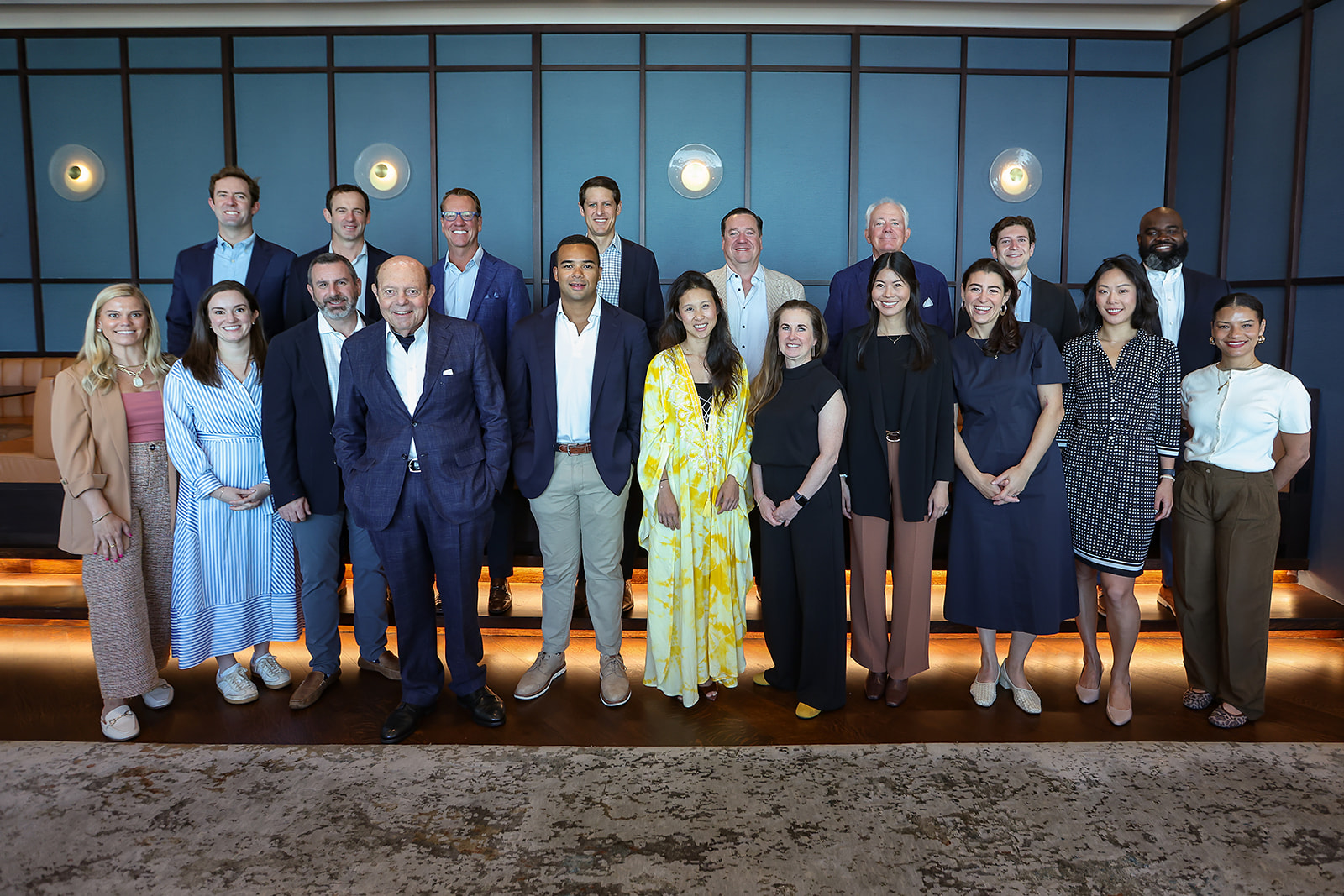
Last week, Canapi Ventures hosted its fourth in-person Canapi Alliance Summit, welcoming founders, operators, bank executives, and limited partners back to Manhatta in New York City for what has become one of our favorite days of the year.
The agenda was deliberately ambitious. We laid out our perspective on the venture environment and the role technology continues to play in reshaping financial services. We walked through the state of both funds, including what has changed in how we underwrite in an AI-first operating environment, what we have learned from a full investment cycle, and where conviction continues to build. We dove deep into deploying agentic AI in banks. We hosted a candid panel on digital assets featuring three of the most thoughtful operators in the category. We brought our portfolio companies together for a working session on how they are deploying AI inside their own businesses. And we welcomed two guests from outside our industry — Danny Meyer, founder of Union Square Hospitality Group, and recently-retired Admiral John Kirby — whose perspectives, in very different ways, ended up being some of the most quoted moments of the day.
A few threads ran through the day that we believe are worth sharing more broadly.
KEY TAKEAWAYS
THE OPPORTUNITY IN FRONT OF BANKING AND FINTECH HAS RARELY FELT THIS CONSEQUENTIAL.
The venture market has comeback to life after a multi-year correction, but it has come back fundamentally rewired. Artificial intelligence is now the dominant force shaping where capital flows, and it has reset assumptions about which kinds of software companies endure. Earlier this year, the broader software sector experienced a sharp repricing, a reaction to the open question of whether enterprise software, as a category, retains durable value in an AI-first world.
Our view, which we shared at length on stage, is that the disruption is real but uneven. The companies most exposed are those whose value rests primarily on interface design or workflow convenience, the kinds of capabilities that foundation models can now replicate quickly. The companies best positioned to endure share a familiar profile: deep regulatory integration, proprietary data that improves with scale, network effects, high switching costs, and genuine domain expertise. Financial services, where regulatory complexity is a feature of the operating environment rather than a limitation, is unusually fertile ground for that second category. It is also where we have spent the better part of a decade investing.
For banks, this is one of the most consequential moments in a generation. The institutions that thoughtfully integrate AI into their operations and offerings over the next several years will widen their competitive position meaningfully; those that do not will find that gap increasingly difficult to close. Connecting our LP base to the partners and technologies best suited to help them move is the work we are most energized to lead in the years ahead.
BANKS ARE MOVING ON AGENTIC AI FASTER THAN MUCH OF THE COVERAGE SUGGESTS.
It has become almost a reflexive talking point that banks are slow on technological adoption. The talking point is increasingly out of date.
One of the most useful sessions of the day was a presentation focused on educating financial institutions on the practical realities of agentic AI: what it can already do today, where the realistic boundaries sit, and how to move beyond one-off pilots into durable production deployments that drive ROI. The room engaged closely with the material, with bank leaders pressing the presenters on specific agentic capabilities and what real-world bank adoption looks like in practice. Equally notable was an observation from the presenters themselves: they have been pleasantly surprised by the eagerness with which banks are approaching agentic deployment, and by how thoughtful those institutions have been as partners.

That observation tracks closely with what we see across our own Alliance and with findings from our most recent AI in Banking survey, which we will share in the coming weeks. The conversations our team is having with bank leaders have shifted markedly over the past eighteen months from "should we be doing something with AI" to "which workflows are we redesigning first, and who is doing it best." For our portfolio companies, that shift is unlocking new demand.
OUR PORTFOLIO IS LEARNING FROM ITSELF AS IT DEPLOYS AI.
One of the structural advantages of the Canapi model is that nearly every company in our portfolio sells into the same end customer: financial institutions. That shared go-to-market reality means our founders accumulate a particular kind of expertise, and they accumulate it faster when they have a forum to compare notes.
This year, we built a dedicated session for exactly that purpose, gathering CEOs and operators from across the portfolio to exchange lessons learned on AI, not as a panel, but as a working room. The conversations spanned what has actually worked, what has quietly failed, how teams are restructuring around agentic workflows, where token spend has produced disproportionate returns, and how to articulate AI-driven value to bank customers without sliding into marketing-deck territory.
The results are visible in the operating metrics across the portfolio. We are seeing meaningful gross-margin expansion in companies that have reorganized parts of their service delivery around AI. We are seeing token spend converted into multiples of OpEx reduction. We are seeing engineering velocity, sales productivity, and product surface area expand without proportional headcount growth. These are not theoretical wins; they are showing up in revenue, in retention, and in the conviction with which our companies are entering the next chapter of their growth.
BANKING’S INFRASTRUCTURE LAYER IS QUIETLY CHANGING.
Another theme discussed during the Summit was the continued evolution of payments infrastructure and digital assets.
Conversations around digital assets have matured considerably over the past several years. The tone this year was notably less theoretical and increasingly operational. Rather than debating whether digital assets belong within banking, much of the discussion focused on how tokenized infrastructure, stablecoins, and modernized payment rails may increasingly operate beneath the surface of everyday financial services experiences.
Several rapid-fire discussions explored topics including stablecoin adoption, tokenized deposits, settlement infrastructure, custody, real-time payments, and the broader evolution of digital financial rails. What emerged from many of these conversations was a growing sense that much of this infrastructure may ultimately become invisible to end users, not because it fails to matter, but because it becomes embedded into how money moves across the financial system.
In many ways, the discussion mirrored earlier periods of technological change in banking. Customers rarely think about the infrastructure powering card networks, ACH systems, or cloud computing today. Increasingly, digital asset infrastructure may evolve similarly: not as a standalone product category, but as a foundational layer enabling faster settlement, improved interoperability, and more efficient financial operations.
For banks, the broader takeaway was less about chasing trends and more about understanding where the financial system itself is heading.
THE FUTURE IS MORE HUMAN THAN IT LOOKS.
Every Summit has at least one guest from outside financial services whose presence reminds the room that good thinking about institutions travels. This year we had two, and, in different ways, they made overlapping points.
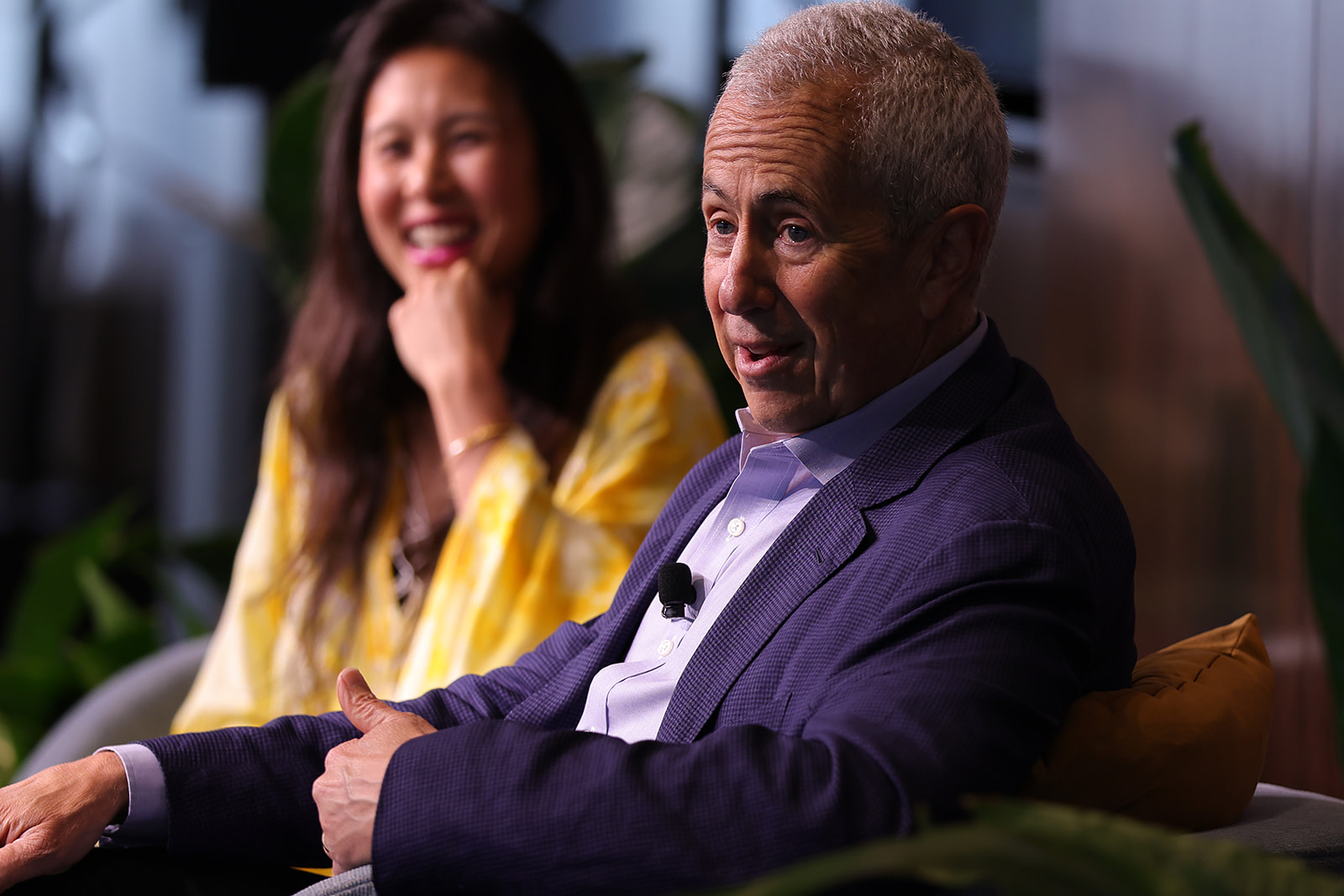
The first was Danny Meyer, founder of Union Square Hospitality Group and (fittingly) host of our venue for the day. He has spent four decades building restaurants, retail concepts, and a global fast-casual brand on a single counterintuitive idea: that in a business where the product is largely commoditized, the differentiator is not only the food but how the guest is made to feel, and he argued, persuasively, that the same arithmetic applies to banking. Every checking account looks the same on paper; the institution that wins is the one that makes the customer feel known. He spoke about hiring for what he calls "hospitality quotient": kindness, curiosity, empathy, self-awareness, integrity, and an extraordinary work ethic. He likened culture to soil and described the discipline of pruning the vine to protect what's planted. And he was clear-eyed about technology, not as a replacement for human warmth, but as a tool that amplifies it when used well and quietly hollows it out when used poorly. It is hard to imagine a more directly applicable lesson for any industry, but particularly financial services.
The second was Admiral John Kirby, who recently retired from a career spanning six presidential administrations and roles as chief spokesman for the Pentagon, the State Department, and the White House. Few people alive have stood at more high-stakes podiums. Over the course of an hour, he walked us through the current geopolitical map (Iran, Taiwan, Ukraine, the U.S. industrial base, cyber risk to financial institutions) with a degree of candor and nuance that the cable-news version of any of those topics rarely delivers. But when asked about the leaders he has admired most, he pointed not to strategy or tactics but to two specific qualities: the discipline to slow down on the most consequential decisions, and the willingness to bring humor into the room when the pressure is highest. Those two qualities, he observed, are remarkably hard to fake, and remarkably difficult to find together.
The thread tying both conversations was easy to miss in the moment but unmistakable in retrospect. Again and again, speakers returned to a similar idea: in periods of rapid technological change, the institutions that win are often the ones that become more human, not less. In many ways, the Summit reinforced something we have long believed at Canapi: technology matters enormously, but durable advantage in financial services still comes from trust, judgment, relationships, and execution.
LOOKING AHEAD
Every year, the Summit reminds us how much of the Canapi model is built around a simple idea: that the right combination of bank executives, founders, operators, and capital allocators, gathered consistently and intentionally, will produce outcomes none of those groups could produce alone. The Alliance has grown meaningfully since our first Summit, and so has the team and infrastructure built to support it. Our LP base is larger and more deeply engaged, our portfolio is larger and operating with more conviction, our team has grown (notably in San Francisco, putting us closer to many of the founders shaping the next generation of bank-relevant software), and the firm we are building is sturdier than it has ever been.
We end this Summit, as we have ended each one before it, energized by what is in front of us, and increasingly aware that the conditions of this moment are the ones our model was built to navigate. AI is reshaping every category we cover. The regulatory environment is, for the first time in years, materially more receptive. Digital assets are moving from theory to practice. Banks are moving faster than the headlines suggest. And the network we have spent years building is more deeply engaged than it has ever been.
To everyone who joined us at the 2026 Canapi Alliance Summit— thank you. The candor of your conversations, the generosity of your time, and the trust you continue to place in this community are the reasons we get to do this work. To those who couldn't make it, we look forward to seeing you in the months ahead and at our next Summit. The arc of the next several years is going to be remarkable, and we are grateful to be walking it alongside you.





.png)


